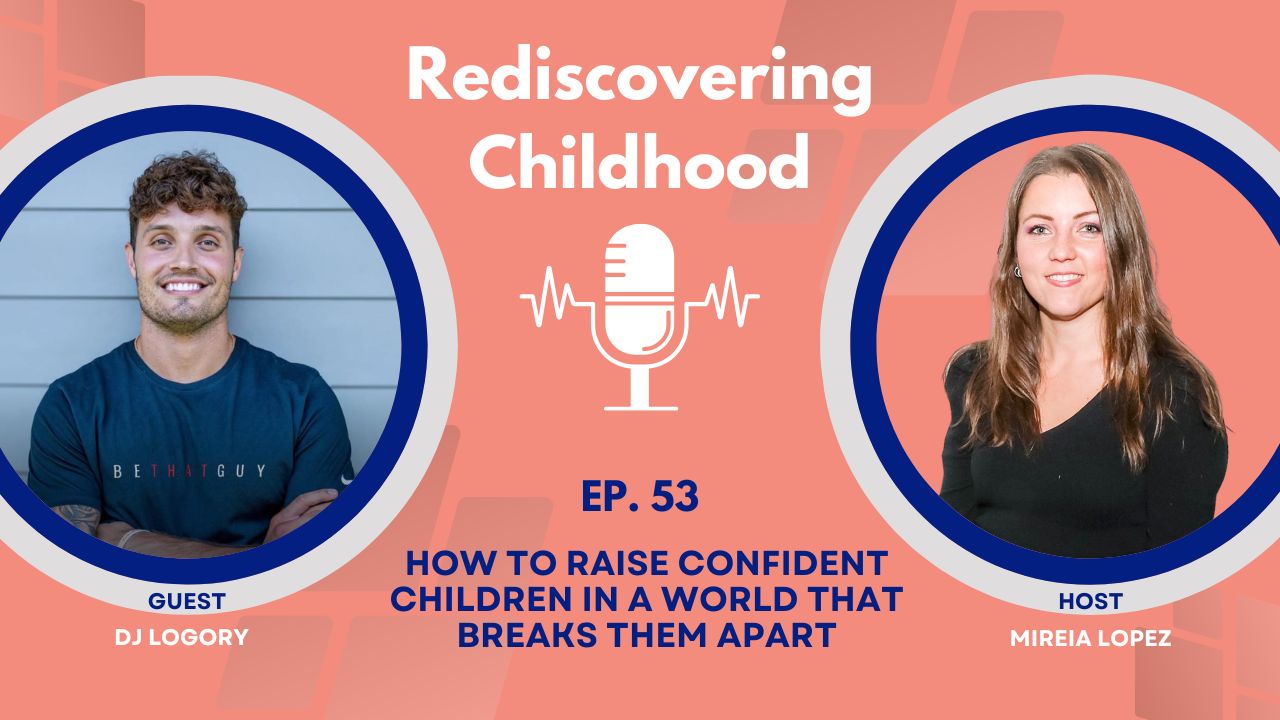
Ep53 - How to Raise Confident Boys in Today's World
If you're raising boys, you've probably felt it - that distance that creeps in, the one-word answers, the unmotivated mornings, the sense that your son is pulling away just when he needs you most.
You're not alone. And more importantly, there's a path forward.
In this episode of Rediscovering Childhood, I sit down with DJ, creator of the Be That Guy coaching program, who spends his days working with young men aged 18-26. These are the boys who grew up - the ones navigating confidence, direction, and purpose. And DJ's insights give us a rare window into what our sons need from us right now, before they reach that crossroads.
This isn't theory. This is what works, distilled from hundreds of conversations with young men and their families.
Listen to the full episode here
Why Raising Boys Requires a Different Approach
Raising boys in 2025 comes with unique challenges. Between screens, social media, and a world that often tells boys to "toughen up" while also expecting emotional availability, our sons are navigating confusing terrain.
DJ explains that young men today often lack three critical things:
Clarity about who they are and where they're going
Connection with trusted adults who see them as humans, not just kids to manage
Challenges that build genuine confidence and resilience
The gap between childhood and adulthood has become a void where boys can get stuck - unmotivated, isolated, and unsure of their path.
But here's the good news: The solution starts at home, with small intentional shifts that create massive ripple effects.
The Vulnerability Dinner: One Practice That Changes Everything
What It Is
One of the most powerful strategies DJ shares is deceptively simple: Take your son out to dinner and share a vulnerable moment from your own life.
Not a lecture. Not advice. A real story about a time you struggled, failed, or faced uncertainty.
DJ shares how his own mother did this with him, opening up about financial struggles during the 2008 recession. That conversation changed how he saw her - not just as "mom," but as a human being who had navigated real challenges.
"I recommend parents sharing their moments of vulnerability with their sons and daughters because it comes back to realising their parents are human beings. At one point, your father was an 18-year-old young man and your mother was an 18-year-old young girl." - DJ
Why It Works
When you share vulnerability with your son, you:
Build trust through authentic connection
Model emotional intelligence in action
Help him see you as more than an authority figure
Create space for him to open up about his own struggles
The key is timing and authenticity. Choose a moment that feels age-appropriate, and frame it genuinely - not as a teaching tool, but as an honest sharing of your experience.
Action Step: Schedule that dinner this week. Choose one vulnerable story from your past that shows you're human. Let your son see that even you've faced challenges and come through them.
Hear DJ's full framework for the vulnerability dinner in the episode
Stop Helping So Much: The Power of Controlled Friction
This might be the hardest truth for parents to hear: Your constant helping is hurting your son's development.
DJ introduces the concept of "controlled friction"- deliberately making life just hard enough to build genuine confidence, discipline, and problem-solving skills.
What Controlled Friction Looks Like
Instead of waking your son up every morning, let him experience the consequences of sleeping through his alarm.
Instead of doing his college applications, let him navigate the process (with guidance, not takeover).
Instead of ordering his food, let him call the restaurant himself.
These small discomforts create the foundation for confidence. As DJ explains:
"We don't build self-respect by sleeping in till 11 a.m. We build it by waking up at 5 a.m. The price of self-confidence is doing the uncomfortable things."
How to Implement It
Start small:
Charge a small amount of rent if he's over 18 and living at home
Let him handle his own scheduling conflicts
Stop reminding him about responsibilities - let natural consequences teach
Allow him to experience mild discomfort (hunger, inconvenience, social awkwardness)
The goal isn't to punish. It's to create opportunities for him to prove to himself that he's capable.
Listen to more examples of controlled friction in action
Teaching Discipline: The Short-Term Pain, Long-Term Gain Framework
Raising boys with discipline isn't about punishment - it's about helping them understand that every choice has a consequence.
DJ breaks it down brilliantly:
"Short-term pain = long-term gain" "Short-term gain = long-term pain"
Making Discipline Visible
Rather than telling your son what to do, walk him through the decision tree:
"If you sleep in and skip class, where does that lead?"
Let him verbalise the consequences. Let him see the connection between today's choices and tomorrow's outcomes.
This builds:
Ownership over his decisions
Awareness of cause and effect
Critical thinking about his future
The Daily Choice Examples
Use concrete examples he can relate to:
Grilled chicken vs. pizza
Waking up early vs. sleeping in
Reading vs. scrolling
Exercise vs. video games
Help him see that discipline is simply choosing the hard thing when the easy thing is readily available.
Action Step: At your next family dinner, discuss one choice each family member is working on. Model the framework yourself - show him you're practicing discipline too.
Building Confidence Through Real-World Experience
One of DJ's core beliefs: Confidence comes from doing hard things, especially things that risk rejection or failure.
Get In the Arena
DJ's advice for raising confident sons:
Physical fitness - Every young man should work out regularly. It builds confidence in his body and capability.
Solo experiences - Encourage him to go places alone sometimes. Sit at a coffee shop by himself. Navigate social situations independently.
Embrace rejection - Whether it's trying out for a team, applying for jobs, or talking to people - let him experience "no" and survive it.
"Get out of your house, go to a Starbucks, a restaurant, a gym, and just say hi to people. There's a lot of value in navigating human-to-human interaction. That's what builds confidence."
The Role of Parents
Your job isn't to protect him from discomfort. It's to create a safe base from which he can venture out, take risks, and return to process the experience.
Action Step: Challenge your son to one uncomfortable thing this week. Let him choose it. Then discuss how it went - not to fix it, but to honour that he tried.
What Emotional Intelligence Really Looks Like in Boys
Forget the stereotype that boys can't be emotionally intelligent. DJ defines it simply:
"Tough guys apologise."
Emotional intelligence in boys means:
Taking responsibility when they mess up
Apologising authentically, not just saying "sorry"
Understanding how their actions affect others
Being vulnerable without losing their strength
The path to emotional intelligence starts with modelling. When you apologise to your son genuinely, you show him what real strength looks like.
Hear the full discussion on raising emotionally intelligent sons
Key Takeaways for Parents
Here's what you can implement today:
1. Schedule the vulnerability dinner - Share one authentic story from your past that shows your humanity
2. Introduce controlled friction - Identify one area where you're over-helping and step back
3. Use the discipline framework - Help your son see the connection between short-term choices and long-term outcomes
4. Encourage real-world challenges - Support him in doing one hard thing this week
5. Model emotional intelligence - Apologise authentically when you mess up
Small Shifts, Big Ripple Effects
Raising boys with confidence, purpose, and emotional intelligence doesn't require perfection. It requires intention.
The dinner conversation. The controlled friction. The discipline framework. These aren't massive overhauls - they're small, practical shifts that honour who your son is becoming while giving him what he truly needs.
As DJ reminds us: At the end of the day, your son wants to become someone he's proud of. Your job is to create the conditions for that transformation to happen.
Ready to transform your relationship with your son? Listen to the full episode of Rediscovering Childhood now and discover even more strategies for raising confident, emotionally intelligent young men.
Listen to the Full Episode Here
About the Podcast: Rediscovering Childhood is a podcast for parents and educators who want practical, thought-provoking wisdom that creates real change. Each week, host Mireia Lopez talks with experts who share actionable strategies for raising conscious, connected children. No fluff - just tools you can use today.
Subscribe on Spotify, Apple Podcasts, or YouTube to never miss an episode.
