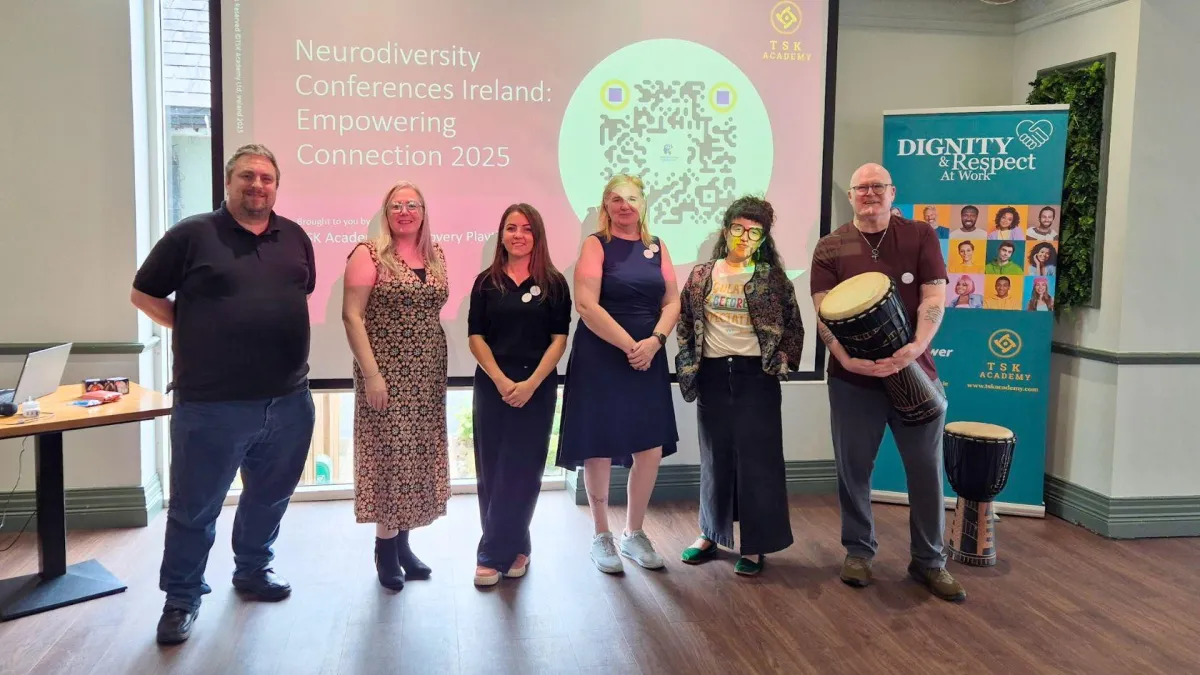
The Power of Connection: Reflections from the Neurodiversity Conference
On 22nd August, parents, educators, and professionals came together for a day of learning, reflection, and connection at the Neurodiversity Conference. What made the event truly special was the openness of the speakers, the honesty of the stories shared, and the practical strategies that attendees said they could take home and start using right away.
Throughout the day, a common theme rang out: connection is everything
Keynote: Simon Preston - Beyond the Labels
Simon set the tone for the day by sharing his family’s journey of raising and advocating for his autistic daughter. His honesty, admitting “I’m not the parent of the year”, offered huge reassurance to parents in the room. As one attendee put it, “It was such a relief to hear that mistakes are normal, what matters is repairing and reconnecting.”
He spoke about masking, low self-esteem, anxiety, and school struggles, reminding us that behaviour is communication. His reflections on trauma and how it often surfaces as depression or self-harm helped participants reframe their understanding. “The story about celebrating small wins really stuck with me,” one parent shared. “It made me realise how powerful it is to notice progress, even in tiny steps.”
Simon’s keynote left people feeling validated, more confident, and ready to look beyond labels to focus instead on children’s strengths and environments where they can thrive.

Workshop 1: Jeanette Delahunty - Understanding PDA
Jeanette’s workshop on Pathological Demand Avoidance (PDA) gave participants practical strategies to support children whose demand avoidance is anxiety-driven, not defiance. In groups, attendees listed direct, indirect, and self-imposed demands and quickly realised how overwhelming even small expectations can feel.
Her tips, using questions instead of commands, offering checklists, giving autonomy, and turning tasks into playful invitations, felt achievable. One attendee said: “Jeanette’s workshop gave me ideas I can try straight away, just changing how I phrase things makes such a difference.”
The takeaway was clear: avoid being overly directive, stay calm, and focus on autonomy and strengths.

Workshop 2: Eddie O’Neill - Syncopated Minds: Celebrating Neurodiversity Through Rhythm
Eddie’s drumming session was a release of energy, emotion, and joy. With African drums in hand, participants experienced the universal language of rhythm. “The drumming was amazing, I didn’t expect it to feel so freeing,” one attendee said. “It really helped me let go of stress, and I realised how important that is for us adults too, not just the kids.”
Eddie reminded us that life moves too fast and that while it’s easier to play quickly, slowing down takes intention and brings more joy. For many, this wasn’t just a music workshop - it was a lesson in inclusion, teamwork, and the importance of regulating ourselves through rhythm.

Workshop 3: Mireia López – The Powerful Role of Play
Mireia’s workshop invited everyone to see play as a language of connection and healing. Participants didn’t just listen, they moved, played games, and even created their own play activities designed to meet different children’s needs.
Her message resonated strongly: “Regulation before correction - using play to connect first was so refreshing.” Others highlighted how empowering it felt to be reminded that children show us what they feel through play if we simply observe first and then join in.
Mireia’s session was a joyful, hands-on reminder that play builds safety, trust, and stronger relationships.

Workshop 4: Sabrina Dominguez - Sensory Integration and Regulation
Sabrina’s talk gave attendees an unforgettable analogy: the sensory cup. Two children may take in the same amount of sensory input, but if one has a smaller “cup,” it will overflow more quickly. “That image of the cup explained everything for me,” an attendee said. “It finally made sense why some kids ‘melt down’ so much faster.”
She explained how common atypical sensory processing is - 96% of autistic people, 50% of ADHDers, and 35% of gifted individuals - and reminded us that because children’s brains aren’t ready for full self-regulation until around age 25, co-regulation is essential.
Her strategies hit home: check your own regulation first, use simple words, validate feelings, and provide tools like fidgets, mats, or weighted blankets to all children. “Inclusion means offering these supports to everyone, not just a select few,” one attendee reflected.
Sabrina’s advice for the first days of school, focusing on connection, co-creating rules, and making sure children feel safe, left educators feeling equipped and inspired.

Closing Session: Audrey Moore - Insight to Impact
Audrey closed the day with grounding mindfulness, helping everyone process what they had learned and turn insights into actions. Through visualisation and group reflection, attendees revisited each session and identified their personal takeaways.
One participant shared: “I’m leaving with more confidence and the courage to stand up for my child.” Another said: “The whole day reminded me that connection really is everything.”
Audrey’s calm guidance ensured the conference ended not with words on paper, but with clear, meaningful actions participants could carry into their homes, schools, and communities.

The Impact
The day left a lasting impression. Attendees said they were walking away with:
Practical strategies they could use immediately
A deeper understanding of behaviour as communication
A reminder to pause before reacting
Tools to create safe, inclusive environments
Greater confidence to advocate for children
This was not a “tick-the-box” event. It was a day of learning, connection, and empowerment.
As one attendee summed it up: “You don’t just leave with notes, you leave ready to act.”
